



Dear all,
We’ve rebranded the newsletter! VC Angle is now The Venturist.
For the past few months, we’ve been busy covering the news, fundraises, and reports coming out of Europe. But over time, it became clear to us that Europe does not need another outlet built around fundraising news and press releases.
So we decided to change direction. Europe, above all, lacks a media culture capable of treating companies, talent, and technological ambition with the seriousness they deserve. We do not celebrate our builders enough and we do not make stars out of our champions.
Our approach will be to help change that by bringing the deepest researched and optimistic insights into the greatness, intelligence, and ambition shaping European venture.
This ultimate European accelerator list is our first article in the Resources & Data Maps series, created to bring the most actionable support to founders and other ecosystem contributors. Upcoming versions will include financial models, investor lists, and so much more.
Without further ado, let’s get right into it.
What the database contains
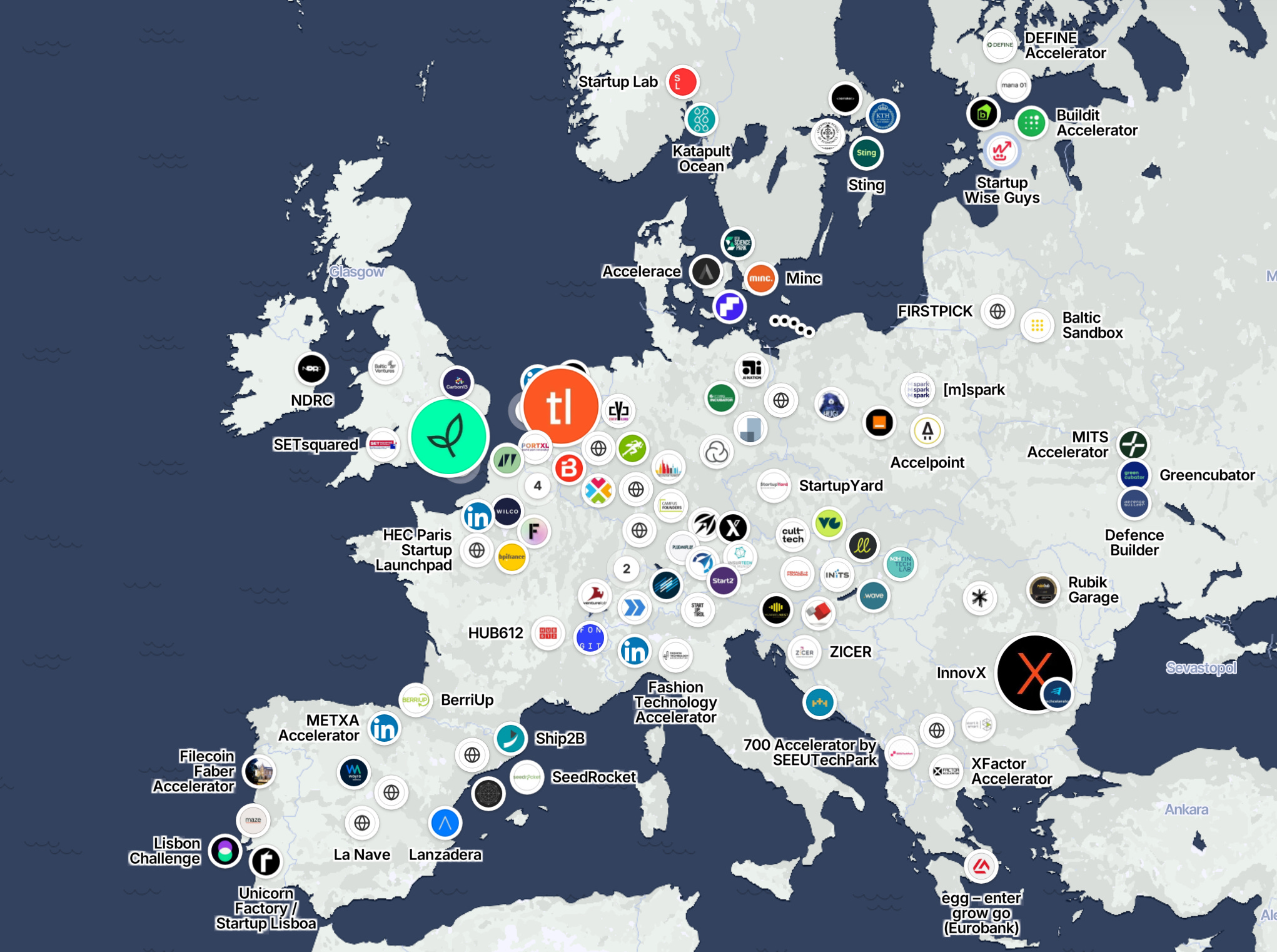
The database contains a manually curated list of the European accelerators, starting from the huge, established brands like Seedcamp or Startup Wise Guys, all the way to niche regional accelerators trying to inspire the first generation of founders in their areas. It’s important to notice that there are many awesome — at worst, and legendary, at best —brands which we have been very tempted to include in this list, had they not been “only” startup and community hubs, or even incubators.
We aimed to keep the list exclusively occupied with the active accelerators, meaning you’ll find certain startup and entrepreneurship hubs mentioned in the database only if they had at least one accelerator-like programme active in their current batch. This also means that big brands with multiple franchises — such as Techstars or Plug&Play — were mentioned only once, and not repetitively for each city they have bases in, making this list even more detailed.
The database contains verified:
Accelerator Name
Website URL and LinkedIn URL
Short Description
City and Country
Typical Check Size and Support System
Space Focus
Notable Investments (not for all entries)

What The Numbers Say
Countries
The list is expectedly led by Germany and UK with 18 and 15 accelerators, respectively
Spain and the Netherlands follow closely with 11 and 10, respectively
Romania surprisingly punches above its weight, with 8 accelerators
Poland expectedly leads CEE with 5 pure accelerators
Ukraine leads in defence-tech based accelerators
Investment Models
58 accelerators have a straightforward model with taking equity. The most common percentages mentioned are between 6% and 10%.
Many accelerators (33%) do not disclose a standard term, indicating that deals are often tailored or depends on the startup's stage.
A significant portion (~28%) are zero-equity programs, often providing grants or acting as university/government-backed incubators.
16 programs use a Simple Agreement for Future Equity (SAFE) or Convertible Loans to delay valuation. Common in high-growth tech hubs like London and Berlin.
Why You Should Care
“Every successful company is unique in their own regard; and every unsuccessful company is the same. They all failed to escape competition.”
Peter Thiel
The path from idea to company is brutal. Finding the right first customers, smoothing out the product, raising early capital, hiring fast enough, doing sales, GTM, all while the most talented people in the opposing team are trying to crush you. In a process as such, every bit of help counts.
Accelerators, at their best, do three things at once. They:
provide early capital when it is hardest to get
provide structure when everything is still messy
and provide access to networks that would otherwise take founders years to build on their own.
The good ones do not just hand out small cheques. They help founders avoid obvious mistakes, move faster, and become legible to investors, customers, and later-stage partners.
That matters because some of Europe’s most important companies passed through accelerator programmes at a stage when they were still fragile, unknown, and far from inevitable. The right programme will not create greatness out of nothing, but it can materially improve a startup’s odds of surviving long enough for greatness to emerge.
2 European Giants That Emerged Through Accelerators’ Programmes
1. Revolut (Seedcamp, 2015)
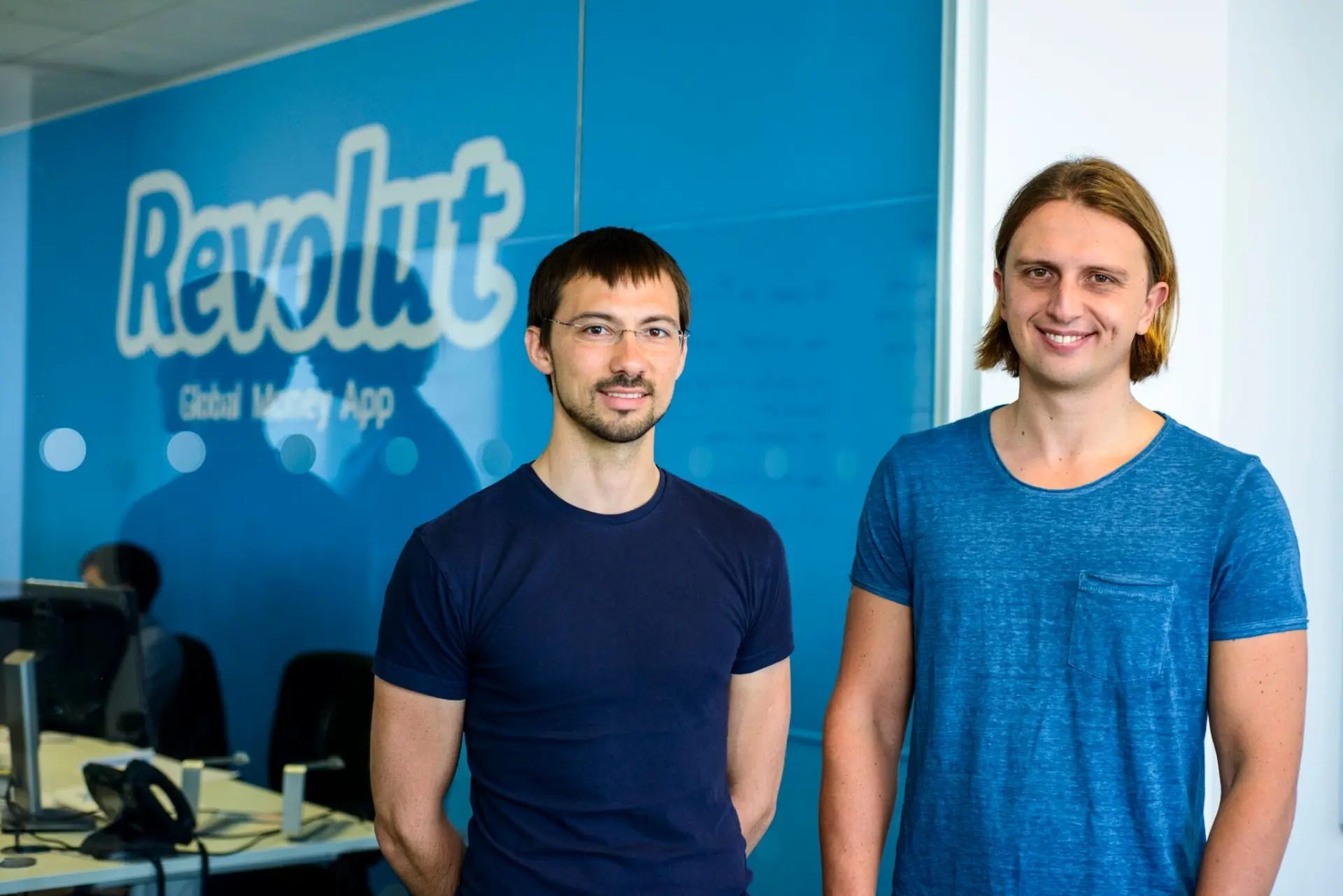
Seedcamp wrote Revolut’s first cheque in February 2015, when the company was Nikolay Storonsky and Vlad Yatsenko working out of Level39, a fintech incubator in Canary Wharf. The product was a prepaid card that let you spend abroad at interbank exchange rates. That was it. Seedcamp’s Sia Houchangnia backed them because the problem was one her own team experienced constantly while travelling across Europe to meet founders.
Months later, Balderton Capital saw Storonsky present at a Seedcamp Week event and decided to lead a £1.5 million round at an £8 million valuation. Balderton’s internal note at the time read that the app had only launched that week, but described the founders as exceptionally smart with deep FX domain expertise.
That Seedcamp presentation was the introduction. Today Revolut is valued at $75 billion, and Balderton’s original £1.5 million investment became one of the best-returning bets in European VC history. Storonsky himself has said that Seedcamp was instrumental in helping Revolut grow from a small-time startup into a global banking alternative.
2. Glovo (Conector, 2015)

Oscar Pierre was 23, fresh from Georgia Tech, and had already failed at two startups when he entered the Conector accelerator programme in Barcelona. Sacha Michaud, a seasoned tech entrepreneur who was also in Barcelona's small innovation scene, first saw Pierre when he was presenting at the accelerator.
Michaud has described the moment simply: within about five minutes of meeting Pierre, he knew he wanted to work with him. After that pitch at Conector, Pierre and Michaud raised €140,000, mostly from small private investors, and launched Glovo in Madrid, Barcelona, and Valencia. The first version of the app had two buttons. You typed what you wanted, and someone on the back end figured out how to get it to you. They had no marketing budget, so growth was purely organic.
Glovo got acquired by Delivery Hero for €2.3bn in July 2022.
Before we drop the list, check out our debut article in the Angles series:
Why Do Most VCs Follow Consensus?

Sir Humphrey Appleby: Didn’t you read the Financial Times this morning?
The Airtable Database
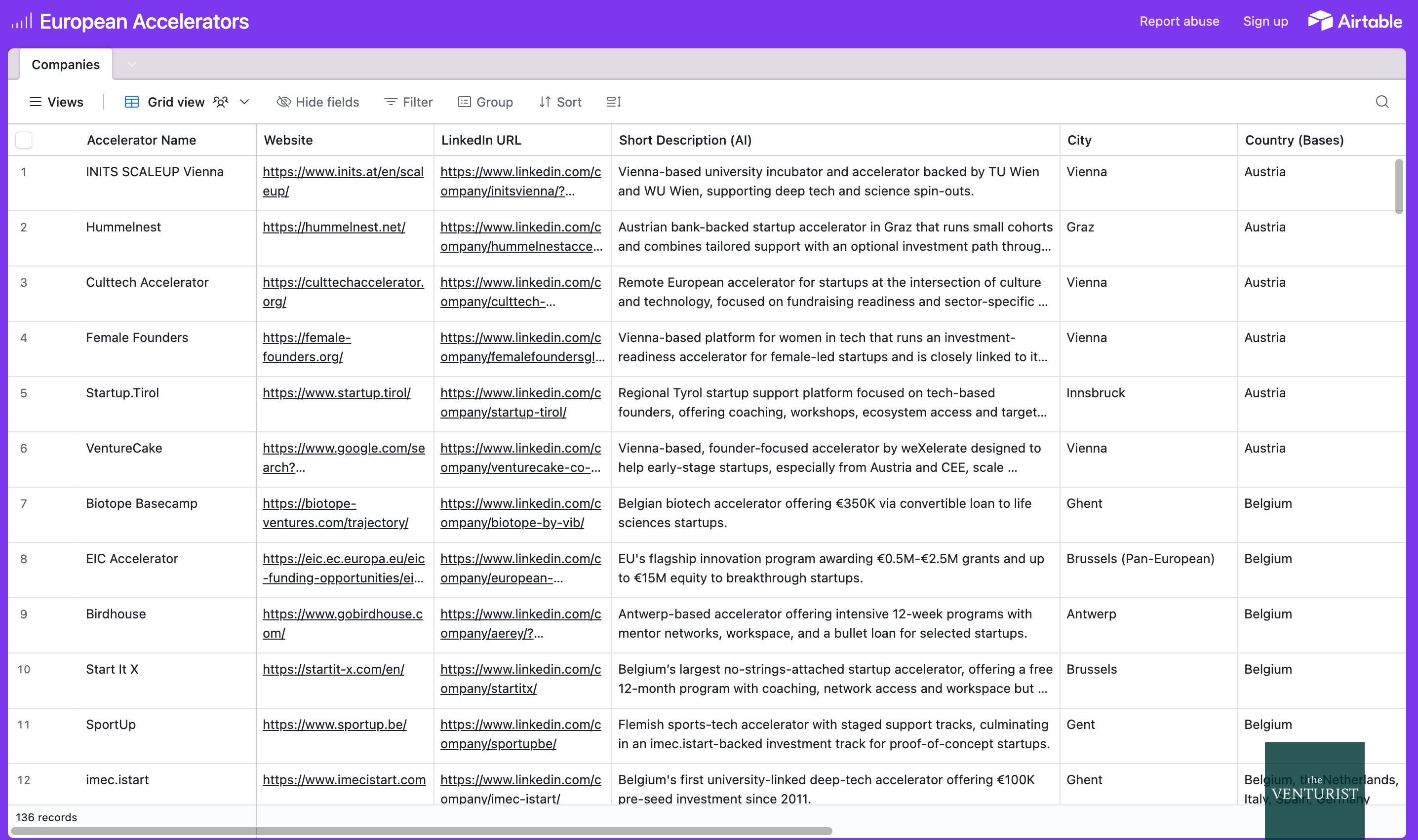
You can access the full database for free by clicking here.