



Hey - welcome to the thirty-second edition of VC Angle Weekly Updates! As always, we're keeping tabs on what actually matters across 🇪🇺 European tech, as well as relevant global tech news. If something broke the news this week and it's worth your time, it's probably below. Scroll on for the deals, reads, and reports you'll want on your radar.
🥂 This is the last edition of 2025! In 2026 we’re planning new formats, articles, interviews, community, and so much more! If you have any suggestions, reply to this e-mail, we always read the responses.
In This Edition:
Nvidia pays $20B for Groq talent and tech, avoids acquisition
US bars Thierry Breton and four NGO leaders under speech censorship policy
Anna’s Archive scrapes 86M Spotify tracks for “preservation”
European AI funding captures 31% of total VC at €8.9B
European fintech raises €18-20B across 1,200 deals
Gartner: AI becomes core enterprise infrastructure in 2026
Karpathy: 2025 crystallizes LLMs as distinct computing paradigm
⏱️ 3:54 Reading Time
💥 Main Events Past Week
Nvidia strikes $20B Groq deal to dominate AI inference market


Nvidia structured a $20 billion non-exclusive licensing agreement with Groq that includes hiring founder Jonathan Ross (creator of Google’s TPU), president Sunny Madra, and key engineering talent while avoiding outright acquisition to sidestep antitrust scrutiny
The deal represents nearly 3x Groq’s $6.9 billion September valuation and marks Nvidia’s largest transaction, using its $60 billion cash position to neutralize a competitor in AI inference chips where Groq’s language processing units offered low-latency alternatives to Nvidia’s GPUs
Groq continues operating independently under CFO Simon Edwards as CEO, with analysts calling the structure “keeping the fiction of competition alive”
Anna’s Archive scrapes 86 million Spotify songs for “preservation archive”

Pirate activist group Anna’s Archive scraped metadata for 99.9% of Spotify’s 256 million tracks and archived 86 million music files (99.6% of all listens) totaling 300 terabytes, planning to release through torrents
Only metadata has been released so far, not actual music files, with the group stating their mission to “preserve humanity’s knowledge and culture doesn’t distinguish among media types”
Spotify disabled the user accounts involved in the scraping and implemented new safeguards, saying it “stood with the artist community against piracy” and is working with industry partners to protect creators
US bars five Europeans accused of pressuring tech firms on content moderation

State Department barred five Europeans under a May visa policy targeting foreigners deemed responsible for censoring protected US speech, with Secretary of State Marco Rubio calling them “radical” activists running “weaponized” NGOs
The five include Imran Ahmed (Centre for Countering Digital Hate CEO), Josephine Ballon and Anna-Lena von Hodenberg (HateAid leaders), Clare Melford (Global Disinformation Index), and former EU Commissioner Thierry Breton, who oversaw the EU’s Digital Services Act
Most Europeans enter via Visa Waiver Program without traditional visas but need online DHS applications, where these five have likely been flagged, with Breton responding that all 27 EU members voted for the Digital Services Act in 2022
📰 Other News
EIB provides €50 million to Comau for robotics and automation R&D at Turin and Bari facilities.
European AI funding hit €8.9 billion in 2025 to capture 31% of total VC funding.
European fintech raised €18-20 billion across 1,200 deals in 2025, with mega-rounds accounting for 55% of total funding.
Mosa Meat raises €15 million as competitor Meatable shuts down, achieving 99.999% cost reduction from its €250,000 first burger.
OpenAI’s compute margins reached 70% in October 2025, doubling from 35% in January 2024.
🔍 Reads & Reports
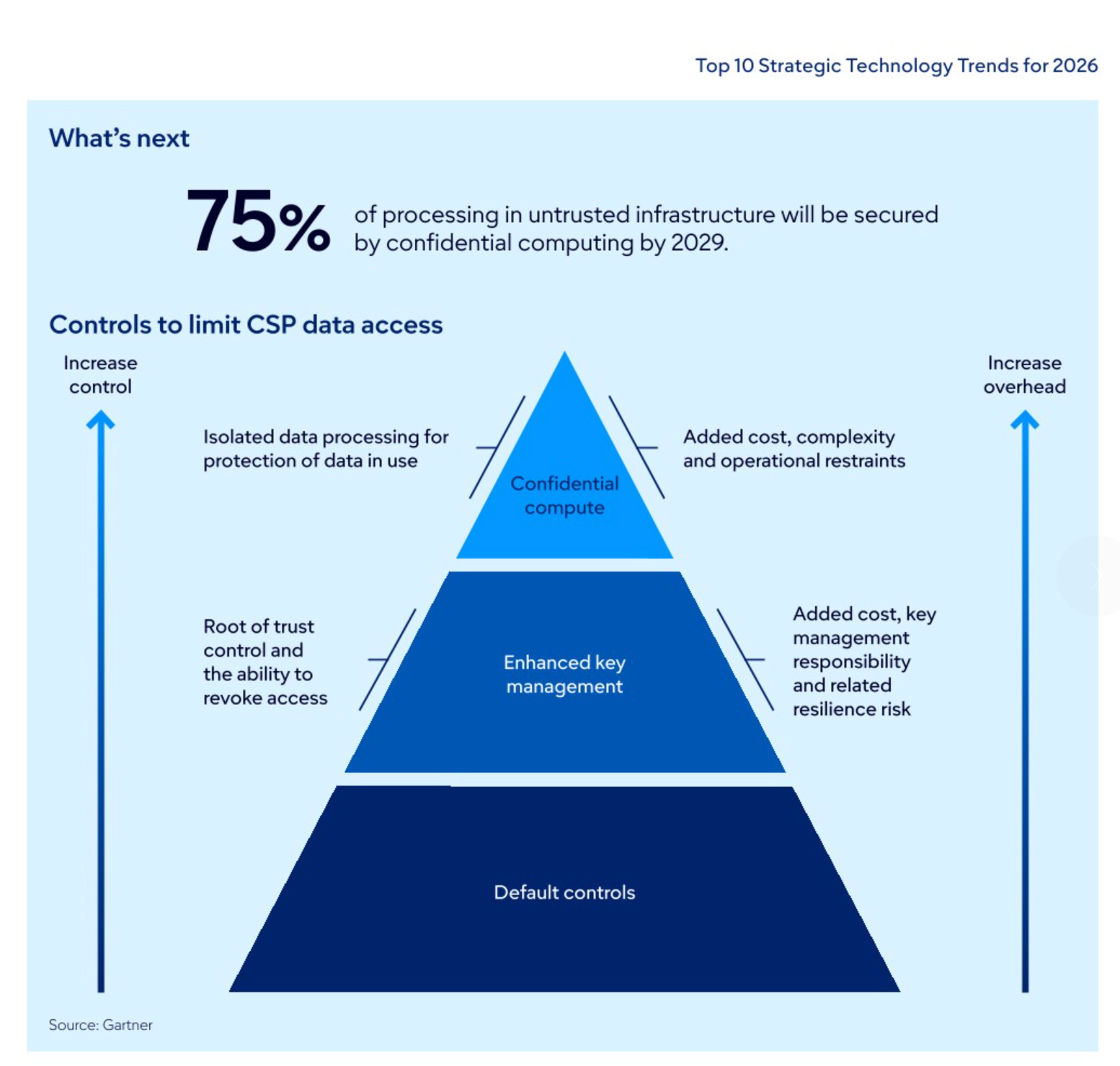
Gartner’s 2026 trends confirm AI as core enterprise infrastructure, spanning AI-native development, supercomputing platforms, confidential computing, multiagent systems, domain-specific models, physical AI, preemptive cybersecurity, digital provenance, AI security platforms, and geopatriation where regulation and sovereignty drive workload decisions.
a16z predicts 2026 will see agent-native infrastructure replacing human-speed systems, vertical AI evolving to multiplayer collaboration, systems of record losing primacy to autonomous execution layers, designing for machine legibility over human interfaces, and hyper-personalization across education, health, and media as products shift from mass-produced to individually tailored.
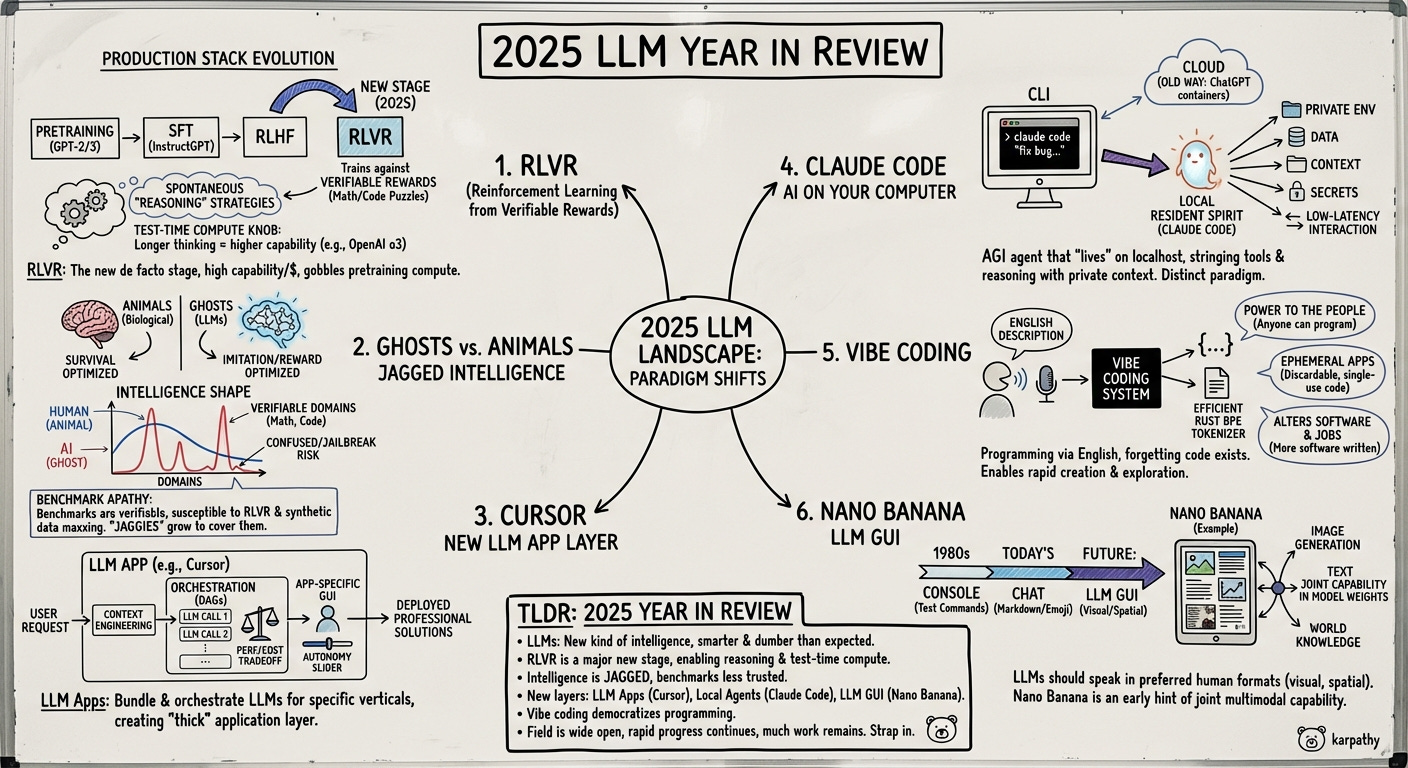
Karpathy frames 2025 as the year LLMs crystallized into a distinct computing paradigm. RLVR training against verifiable tasks like math puzzles redirected compute from pretraining while producing jagged, non-human intelligence that undermines benchmark reliability. The application layer thickened—Cursor orchestrates models into domain tools, Claude Code operates locally on user machines as the first convincing agent, and vibe coding normalized natural language programming for ephemeral software creation. Early multimodal systems like Gemini Nano Banana hint at LLM GUI beyond text interfaces, though the industry has barely tapped current capabilities.
👋 That’s a wrap for this week.
If you’ve got a round, role, or resource others should see, reply to this or ping us at hello@patrons.vc or send me a message on LinkedIn. We’re bringing the best deals to our partner VCs by building Europe’s finest venture network at Patrons. If you have a good deal flow, want to expand yours, or want to reach the right investors, send us a message!
If you found this useful, send it to a founder or friend who’d appreciate it.